A Good Children’s Book Is Hard to Find

March 24, 2011 Art, Books, Child Raising, Culture, Family Print Page

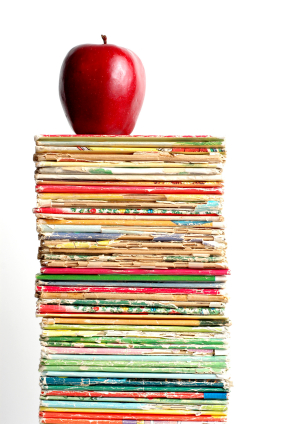
The library shelves are a shotgun full of liberalism and political correctness aimed squarely at your child’s mind. Gone are the days when a parent could safely take children to the library and let them run loose in the children’s stacks, as my mother did back in the 1950s. She has reminded me many times of how I would gleefully run down the stairs to the children’s section, and how we would haul stacks of books home with us. I was an early reader, she said, because of that experience.

I love the library! Don’t get me wrong; for an educated library customer, a library can be an invaluable resource. But that’s the problem: a small child cannot function as an educated library customer. They simply do not have the experience and knowledge required. And that’s where you, the parent, need to step in.

A momentary gasp, and a feeling of intimidation at the task ahead — that’s what I expect from you at this point. In my own mind, the vista of shelf after shelf of good, questionable, or downright wicked reading material is a daunting sight. How on earth can one sort it out? It’s the same with bookstores; they’ve created truly inviting (at least to small kidlets) reading areas, where children can relax and curl up with a “good” book. But is that book good?

Before I scare you away completely from these venues (and I recognize that I might, given the seriousness of this subject), I’d like to say that exposure, even multiple exposures, to less than sterling children’s literature is not going to permanently harm your child. In fact, sometimes children can possess, and have acquired from you, the parent, a marvelous pair of “reality” glasses that put the dysfunctional and traitorous tendencies of some books into sharp focus. But you have to work to put those glasses over his or her eyes; and that work starts in earliest childhood, before they actually get to the point where you are taking them to the library and letting them loose.

Lay the groundwork when you’re pregnant with your first child, if you can. It’s possible to jump into the middle of this and succeed, but it’s a whole lot easier if you start early. Remember, this is a process you participate in, and not a completed list of approved books, although I hope to be able to provide that in the future. In this article I will touch on family histories, board books for infants and toddlers, and picture books. Books for the older child will come in a later article.

The first question a parent might ask themselves in this process is: What is most important to me in a children’s book? Is it the the quality of writing? The art work? The worldview? Different parents are going to have somewhat different answers to that question, but for those of us who love God and love our European heritage, there are probably a few obvious answers to those questions.

Most likely my readers will be concerned with the quality of the writing and artwork (and I am a great fan of quality in both), but wish to have their children grow up understanding and loving their God, and their European Christian heritage. What to do next?

A good place to start might be by looking at what qualities you wish your children to develop as well. Do you wish for courage? Look for books that focus on European heroes and cultural icons. Do you wish for understanding of culture and family history? Folk and fairy tales can fill in there, but spending some time writing down the stories your grandmother and grandfather told you about the old country will be a valuable exercise when your child wishes to know what made the place they came from special, not to mention why they came here and the struggles and triumphs, however large, however small, they experienced. Or perhaps the stories go way back here in America, because your ancestors are part of the founding stock. Gather the family stories and legends, perhaps in a handwritten book or a scrapbook layout with pictures, if available, of the family members who were there when the story took place.

But start early; people pass on and stories get forgotten, and details become fuzzy unless they’re written down. I wish my father had been more willing to have his family stories written down, but I think he was more afraid that someone in the family would be offended, rather than that someone would be remembered.

Remember, in everything, family is gold. And everything your ancestors and family members did for God is pure gold, refined in the fire. Do not neglect to include these stories in your memoir; they give much for a child to admire. Again, remember: “Grandchildren are the crown of the aged,and the glory of children is their fathers” (Proverbs 17:6, ESV). How can they really understand their history, if the stories of their fathers’ good deeds for God are hidden from them?

This can be an ongoing project, and one that can be handed down to your own children as they become adults. The only rush on this is saving the stories before the people disappear.

But I digress. Let’s go back to the beginning, considering books already published.

Many children teeth on board books, those sturdy little tomes dedicated to single subjects, with colorful illustrations or photographs and large text. These can be valuable introductions to subjects such as colors, clothing, TRUCKS (just ask the small boys in your household), and holidays. These books are easy to screen for appropriate content; a quick glance is enough to tell you if the illustrations are multi-racial and multi-cultural, or consistent with your heritage. More subtle concerns might be pictures portraying baby girls in TRUCKS…we all know that TRUCKS are the realm of boys. Of course, I’m joking around a bit here. I do guarantee that a board book with trucks in it will be monopolized by the tiny guys, while the girls will be focused on something ever so much prettier.

Some board books approach earliest learning from what claims to be a Christian point of view. While I believe that some overtly Christian themed board books can be good for babies and toddlers, I also think that babyish illustrations trivialize the Word of God, and that talking vegetables are most likely not found in the ranks of the saints. Books that present the stories of the Old Testament and the Gospel clearly seem scarcer than hen’s teeth these days. If you find them, buy several copies, because they might not be in the bookstores for long and teething babies run through books quickly. But do attempt to find books that do not trivialize the Word of God.

Some general thoughts about board books: it’s good to focus on nature and the natural cycles of the world, on families and their individual members (honoring parents and grandparents comes immediately to mind), and to reinforce proper gender roles. It’s most likely damaging to focus on friends-around-the-world and the creation myths of foreign cultures. To each culture their own mythos; our children need to know and love their own from their earliest days onwards. While I have some quibbles about the beliefs of those who practice Waldorf education, the children’s books I’ve seen from their writers and publishers are invariably gentle in tone, colorful and lovely in an imaginative way, without the cartoonish details that some children’s books indulge in. They are very European in character and honor nature and its cycles.

And that brings me to the issue of aesthetics in children’s books, as we are about to enter the realm of the picture book. Art is important, not just as in “fun to look at,” but as in “what you see shapes your mind.” I am convinced that the quality of the art you surround your children with shapes their perception of the world and their recognition of what quality is for their lifetimes. To this end I recommend that SpongeBob SquarePants and his ilk not be brought into your home. I’m sure that many will disagree with me on this point, and even cite their own healthy development after consuming the leftovers of Saturday morning cartoons. But I’m not sure you would find these folks enjoying fine Western traditional art in the museum on Saturday afternoon.

Finding picture books that express appreciation for Europe and its cultures is difficult. But if you haunt the websites that offer Celtic or Scandinavian merchandise, you can sometimes find beautiful books; you may even be able to find them at your local 99 cent store. I’ve found the 99 cent store to offer grand surprises in this arena from time to time. A particularly nice 99 cent store find was The Great Stone Face, a tale by Nathaniel Hawthorne retold by Gary D. Schmidt and beautifully illustrated by Bill Farnsworth (six years of age and up). Its tale of a man whose devotion to his family and his community dominates the desire for wealth and glory is an inspiration to those of us who feel compelled to live simply and focus on those who love us.

When I was little I enjoyed books like the Flicka, Ricka, Dicka series by Maj Lindeman, about three little blond sisters who looked very much alike and who got into pickles where they had to prove their ethical and moral behavior — very Scandinavian, and very much proof of the benefits of homogeneity. When the members of a particular people honor the same rules, life becomes much more pleasant. For those who wish to learn their alphabet and their Scandinavian culture at the same time, a colorful primer like D is for Dala Horse by Kathy-Jo Wargin, illustrated by Renee Grael, is a good choice.

The Elsa Beskow books like Peter in Blueberry Land and Around the Year give you a cozy feeling and focus on the natural cycles of the seasons and a simple, European life. For those who do not find reading about elves and fairies to be offensive, there are some good titles, including the Giant Golden Book of Elves and Fairies, and the Tomten books. Aesop’s Fables for Children, illustrated by Milo Winter, is lovely and teaches wisdom in brief, animal-story snippets. And don’t forget Mother Goose Rhymes, which even come in board book format.

Finding unusual books like these takes a little dedication, but sometimes no more than an internet connection. The Flicka, Ricka, Dicka books are extremely hard to find, except on Alibris.com (note: as Alibris simply represents individual sellers, the timeliness of delivery can vary widely). I’ve found small books on Scottish history at British import stores. It takes an adventurous attitude, and a willingness to put books back on the shelf if they look promising from the blurb on the cover but prove to have a less-than-desired attitude on the inside. Key things to be aware of are the way your people are portrayed: are they shown as oppressors? Put the book down. If your Christian values are decried, put the book down. Is the world portrayed as a rainbow of colors, sexual orientations, religions, and other less than positive imagery? Put the book down.

Even if someone gives you a book as a gift, you have no obligation to share it with your children if it doesn’t meet your standards. Commercially branded books that tie into products and toys might not seem to be bad, but can cultivate a desire to own every single one of the cute little items so carefully produced with your child (and your pocketbook) in mind.

I’m sure this only begins to touch on the many excellent picture books available; it’s up to you to screen them. Remember, look for beauty of image and word, the honoring of your culture and your Christ, and the promotion of wisdom as a life goal for your little ones. These are things you should consider first, last, and always.

Enjoy! In the next article we will go on to early readers and upwards!


Read Part 2 of the series here.

Read Part 3 of the series here.


Tags:

Print Page

About Laurel Loflund

Older than the hills, I've had direct experience with the things that work--or don't work--in the public school system, in personal life and community life. A resident of California and a descendant of immigrants from the land of the midnight sun and Northern Europe, I have a great love of my People. A mother of one, I appreciate the blessing of motherhood and wish the best for all our children, God willing, not just survival but that they (paraphrasing 1 Thessalonians 4) increase more and more; that they also aspire to lead quiet lives, to mind their own business, and to work with their own hands, that they may walk properly toward those who are outside, and that they may lack nothing. Blessings! My email: laurel.loflund [at] hotmail.com.

  • Matthew Cart

    Good article Laurel. I’ve been pretty frustrated with the selection of children’s books. I’ve strongly considered writing my own books; and I am still considering writing books together with my oldest son; he will be the illustrator (since he is an excellent drawer). God willing I’ll have some good, solid, Faith & Heritage recommended children’s books in the coming years : )

  • http://fatherd.wordpress.com/ Father D

    Good, solid advice, Laurel. Thank you for an excellent article on a very important topic.

  • http://www.faithandheritage.com Laurel Loflund

    Matthew: I will be looking forward to reviewing any books you and your son produce; it will be an honor. Self-publishing through Lulu.com can get a first title off the ground.

    Father D: Thanks for the compliment! I appreciate it.

    Blessings, all,
    Laurel

  • Sylvanus

    Be sure to avoid children’s books published by Scholastic, Inc.; for their values are anti-Traditionalist. How they could call themselves ‘Scholastic’ given their less-than-average material is beyond me.

  • http://fatherd.wordpress.com/ Father D

    When my own children were small, forty and more years ago, the Arch Books, published by Concordia Publishing House, St. Louis, MO, provided really good Bible stories. They are the publishing house of the Lutheran Church – Missouri Synod.

    I hesitate to endorse them today because it has been so long since I have seen them; they may have become multi-cultural in their presentation in the intervening years. Does anybody know?

  • Randall Gerard

    Thanks, Laurel, for a very important article. I concur with the titles you mentioned, and would also recommend these:

    The Little House books by Laura Ingalls Wilder
    The Wind in the Willows books by Kenneth Graham
    The Ox-cart Man by I. Forget ;-) This is one of our favorites, by the way, I don’t know why I can’t remember the author. Oh well. My youngest has it memorized I think, and she’s 18!

    Also, anything by Beatrix Potter (Peter Rabbit) or A. A. MIlne (Winnie the Pooh) equals good for children, especially if your heritage runs strong toward that sceptred isle, Great Britain.

    For older kids, and as read-alouds for younger kids, too, it’s hard to beat the Narnia books by Lewis, or the Hobbit books by Tolkien. NO ONE is writing anything close to these today. J.K. Rowling would not make a single patch on Lewis’s or Tolkien’s english tweed jackets. Period. Todays ADULTS need heavy doses of Lewis and Tolkien, IMO!

  • http://www.faithandheritage.com Laurel Loflund

    Sylvanus: I second your *dislike* of the Scholastic books. They are indeed a vehicle for contemporary attitudes, which I do not support.

    @Father D: I will have to look into it, but sometimes older copies of good books are available through Alibris.com; I will check and see whether the books you mention are available there.

    @Randall: Some folks I know have issues with the Little House books; I will do more research into that. Some of the other titles you mention are already in the second article I have in the works, Books for Early Readers and Beyond.

    Folks, I really appreciate your input, and feel very blessed.

    :-)
    Laurel

  • http://fatherd.wordpress.com/ Father D

    I would like to suggest a book that may be of general interest to all who read this blog, not so much a children’s book, but a book of interest to adults and all ages. The book is

    The Royal Path of Life
    by T.L. Haines & L.W. Yaggy
    Wever & Company, Kansas City, 1883

    Republished by
    Bud and Debbie Neptune
    RR 1
    Dawn, MO 64638
    1997

    Although not overtly Christian in its outlook, it is very 19th century proper, common sense commentary about all aspects of life. It is available from Amazon at a reasonable price, and I think many will find it interesting reading.

  • http://www.faithandheritage.com Laurel Loflund

    I own a copy of this book; a few years ago there were nice looking hardbackk reproductions made of it, at which time I picked up a copy. I think it was written by Mormons, but I could be wrong. Still, a valuable resource.

    Thanks, Father D.

    • Steve Florman

      Laurel,

      I don’t think this book (TRPOL) is LDS in any way, but I would not discount a lot of children’s and youths’ books by LDS authors. If you object to the “Mormon” content, stick to their Biblical stuff and you will probably find that you have more in common with your Mormon neighbors than you would have thought.

      • Laurel Loflund

        I don’t have a problem with the book, Steve. Just commenting on the authorship. While I have serious problems with Mormon theology (and I know quite a bit about it, courtesy of Mormon friends over many years of acquaintance), certain things the Mormons have produced are quite valuable.

  • Bruce

    Here’s a couple of good links for children’s books published between 1880 and 1920. They’re public domain now so the second link publishes the entire contents of the book.

    http://www.yesterdaysclassics.com/

    http://www.mainlesson.com/

  • Daniel

    One of the best articles I have read on this good site.
    I cannot wait for the next installment.

    • http://www.faithandheritage.com Laurel Loflund

      Thanks, Daniel. I can’t pretend that it is comprehensive, and I know I have left out good resources. I’ll try and add them to the comments as I remember them.

      Blessings,
      Laurel

  • http://vonlind.com Chad

    Thanks to Laurel, who sent my children a CD full of great books from a outfit called Heritage History. The CD came loaded with illustrated PDF books on Beowulf, Pilgrims, Vikings, Celtic lore, historic figures and more.

    PDF books can be a bit of a problem for reading with children… but if you have a tablet reader like a Nook Color or iPad, you can read the PDFs easily with the children on the couch whereas you’d be hard pressed to find these books in print or at an affordable price.

    • http://www.faithandheritage.com Laurel Loflund

      Heritage-History is a fabulous resource for all ages. They also offer their collections as Curriculum, I recently found out, with additional teaching helps.

      The Nook Color or iPad work very well with PDFs; although you’ll need an App to read the PDFs in addition to the standard iPad software. Well worth the small expenditure, however.

      In addition, one can always print out the PDFs and put them into binders as well. I consider this option insurance for TEOTWAWKI scenarios, when electricity may be scarce as gold.

      BTW, the second installment is to the F&H editor; hope to see it up here soon.

      Blessings!

  • Betty the Beast

    What’s wrong with the old standard fairy tales? I grew up on those, just loved them, couldn’t get enough. And see, I turned out okay! I still collect old fairy tale books and actually read them. Yes, even Grimm’s.

    • http://www.faithandheritage.com Laurel Loflund

      Betty, thanks for your interest. I mention Folk and Fairy Tales in the article, briefly, and have nothing against them, in fact, encourage their use. I, too, collect the books.

      If you are a lover of children’s book illustrations, as I am, you might enjoy Dover Books selection of Fairy Tale books in their more expensive, but lovely, Calla editions.

      http://store.doverpublications.com/by-subject-calla-editions.html

      Blessings!

  • Betty the Beast

    Yes, Laurel, I absolutely love old fairy tale book illustrations. Thank you for the link. Their version of East of the Sun and West of the Moon is different from the collection I have under the same name. The illustrations are different. In any case, I just get lost in them and their eeriness. I just wish I had taken better care of my now-ancient fairy tale books.

  • Laurel Loflund

    That’s all right, Betty. The paper a lot of the old books were printed on was not acid free, and as such deteriorates over time. We do the best we can with preservation.

    Scanning your books and saving them as PDF files might be a great project to help retain our history.

    I’d be interested to know which tales were in your version of East of the Sun, West of the Moon, and the date the book was published.

    :-)

  • Betsy the Beast

    Hi, L. The following are the stories in the collection by Gudrun Thorne-Thomsen of Nordic folk tales that I have.

    It’s a small hardcover book, maybe 5″ X 7″. I don’t know the date of publication but we have had the book for at least 60 years and it looks older. I looked around on the internet and there is mention of two versions, one pub. 1916 and the other 1937.

    East o’ the Sun and West o’ the Moon
    The Three Billy Goats Gruff
    Taper Tom
    Why the Bear is Stumpy-tailed
    Reynard and the Cock
    Bruin and Reynard are Partners
    Boots and His Brothers
    The Lad Who Went to the North Wind
    The Giant Who Had No Heart In His Body
    The Sheep and the Pig Who Set Up Housekeeping
    The Parson and the Clerk
    Father Bruin
    The Pancake
    Why the Sea is Salt
    The Squire’s Bride
    Peik
    The Princess Who Could Not Be Silenced
    The Twelve Wild Ducks
    Gudbrand-on-the-Hillside
    The Princess on the Glass Hill
    The Husband Who Was to Mind the House
    Little Freddy with his Fiddle.

    Please note that in this book it’s “East o’ the Sun and West o’ the Moon”, not “of”.

    My fave story is The Squire’s Bride. There’s all kinds of versions that I’ve read, but this is the best.

    I cannot say for certain who did the colour illustrations but I would bet it was Frederick Richardson. They have that Art Nouveau look that is so good for fairy tales.

    My poor book contains some scribbling circa 1949-50? compliments of my older sister, and also what appear to be…coffee stains. We were allowed to drink coffee when we were very small.

    To get off topic: I know a woman who (maybe 20 yr. ago) accused her ex husband of “abusing” her young son (when he had visits with his father) by “feeding him coffee”. He didn’t, but the child had some little brown stains on his shirt when he got back home. Crazy world, isn’t it. Give them coffee = abuse! Feed them the filth in today’s school curriculum = expanding their minds.

    Right…

    • Laurel Loflund

      The Dover version, which I have, is a copy of the 1914 version illustrated by Kay Nielsen.

      The stories in it are:

      East of the Sun and West of the Moon (sic)
      The Blue Belt
      Prince Lindworm
      The Lassie and her Godmother
      The Husband who was to Mind the House
      The Lad who Went to the North Wind
      The Three Princesses of Whiteland
      Soria Moria Castle
      The Giant who had no Heart in his Body
      The Princess on the Glass Hill
      The Widow’s Son
      The Three Billy Goats Gruff
      The Three Princesses in the Blue Mountain
      The Cat on the Dovrefell
      One’s Own Children are Always Prettiest

      About the coffee, LOL, my grandfather, when I was five years old, used to dip sugar cubes in his milk-laden coffee and give to me to suck on. I’ve been hooked ever since.

      If that’s child abuse, Starbucks must love it!

  • Matthew Cart

    http://www.amazon.com/Doctor-Soto-Sunburst-William-Steig/dp/0374418101

    Doctor De Soto

    This is a children’s book today that my mom used to read to me growing up, and one that our children enjoy as well. It’s about a Mouse Dentist who works on different animals teeth, except his sign says he will not service cats, foxes, etc. He totally doesn’t trust those creatures. In the end he ends up outsmarting the fox, who tries to eat him after he makes the mistake of actually trying to service his tooth. You’ll never see a book like this printed again soon : )

    • Betty the Beast

      I don’t have little children any more but I am going to buy Doctor Soto for myself. And why not!

      • Laurel Loflund

        There’s no reason not to enjoy a good children’s book, no matter what your age.

        Speaking as the older one of the group here,
        Laurel

  • http://www.faithandheritage.com Laurel Loflund

    Matthew, it sounds like a great book for parents who wish to make sure their children understand that there are safe, and unsafe, people in this world, and that it’s OK to avoid the unsafe ones!

    Blessings, and thanks for posting this!

  • http://www.candynomics.com Evan

    This article is interesting to me because I too noticed a lack of conservative books for children on the market. So I started a publishing company and wrote one. I haven’t sold very many, but then again, not many people know about it. It is on conservative economics and entrepreneurship. I plan on writing more on various topics in a way that promotes conservative values and ideas and providing additional education resources and guides to accompany them.

    • http://www.faithandheritage.com Laurel Loflund

      Evan, if you’d like to share a link to your book, I’m sure we’d love to take a look at it.

      Thanks so much,
      Laurel

  • Jonathan

    Here’s a useful resource for you:

    http://www.steinerbooks.org/p.php?id=11

    A great place to find excellent renditions of classic European fairy tales. Enjoy!

    • http://www.faithandheritage.com Laurel Loflund

      Thanks, Jonathan, for the resource. I enjoy the visual style of the Waldorf children’s books, so this is a good resource to have.

      Blessings!

  • Sally

    I too have a difficult time finding appropriate books for my children (they are toddlers). So many have scary themes or naughty examples of behavior. I want more character-building type books.

    However, I wonder what is wrong with “multi-racial” and “multi-cultural?” I don’t see this as wrong or damaging in any way to my children. In fact, I welcome stories that show people of different races and cultures. And I am of European heritage and fully “white.” Our race is not the only Christian race, and our ancestors were not all perfect.

    • Betsea Ross

      nothing is wrong w/ multi-racial/cultural on the whole. The terminology however, has been corrupted by the proggressives to generally equal white or european descent= bad, oppressors. There view has white or european having been in charge long enough- sorry I am rambling!
      My daughter 7 loves my old books and we are lucky to even have some from my Dad-

      • http://www.faithandheritage.com Laurel Loflund

        Betsea, as I mentioned to Sally, there are many resources for multi-cultural books in the mainstream media and standard bookstores. Those who wish to use these kinds of books are welcome to find them there.

        You make some interesting points regarding how so-called progressives use multi-culturalism. It is this focus that becomes a destroyer of our culture. If a culture wishes to remain distinct and unique, and the publishing industry produces books which encourage amalgamation of lot of cultures, it necessarily functions as the arm of cultural genocide.

        Best wishes,
        Laurel

    • http://www.faithandheritage.com Laurel Loflund

      Sally, there are so many books which promote multi-culturalism in a way that is designed to dilute traditional European culture and ultimately change it into something unrecognizable. It is part of my mission to ensure that traditional European culture is carried forward into time, so that we doesn’t end up being something like the Etruscan culture, lost to everyone.

      I support other cultures creating books that encourage and support their traditional cultures as well; it is the prerogative of each racial and ethnic group to promote their own culture in a healthy way, and that includes European culture.

      There are many, many books promoting multi-cultural ideas for children in the average bookstore, and that would be the venue to find them. There are many reviews written about these books in the mainstream media, so that would be easy for readers to find.

      For reviews of books that support traditional European, Christian culture, well, it’s pretty much just us. If you’re interested in what we have to offer, here we are.

      Thanks for your input,
      Laurel

      • Edgardus de la Vega

        Indeed, the support for our European and Christian culture is a ‘natural must’, by way of our literature. Our European American youth are in need of re-connecting with their historic identity.

        As stated: other cultures preserve their values and traditions.

        The diversity of our European folklore is the basis of our spirit and preservation.

        • Laurel Loflund

          Thanks, Edgardus, for your comments in favor of educating our youth about their historic identity through the classic literature of Europe. It is extremely important; we who carry the torch are ultimately useless without young folk to pass it on to.

          Blessings,
          Laurel