A New Country

July 9, 2011 Africans, Blog, Current Events, Ethnonationalism, Politics, Race Print Page


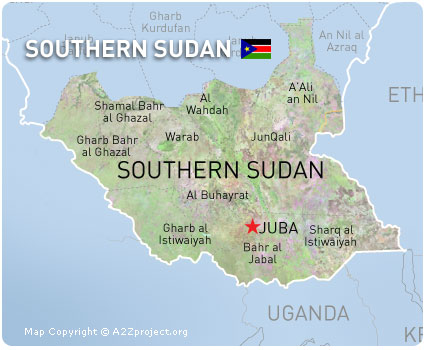
Earlier today the people of the new country of South Sudan officially celebrated their independence.  In the wake of the South Sudanese vote in favor of secession several months ago, I wrote an article praising the vote and pointing out how ethnonationalism is the path towards peace for Africa (and everywhere else for that matter).  In that article I also pointed out the double standard wherein the establishment praises the self-determination efforts of non-whites while denouncing the self-determination efforts of whites as evil, racist, and white supremacist.

I have no problem with any of this [praise for the South Sudanese secession vote] and I even agree with much of what I read, but imagine the difference in response by these services if this secession vote was about a white controlled area trying to break off and form a more ethnically-linguistically-religiously homogeneous country? We don’t have to imagine. The slander and hatred heaped upon the Confederacy, the cheering of the NATO bombings of Republika Srpska, and the labeling of groups like Vlaams Belang and Lega Nord as evil white supremacists is more than enough to show that there is a blatant double standard when it comes to most American Christians’ treatment of ethnicities pursuing their right to exist and rule their own destiny. If you’re African it’s fine and laudable, but if you’re European then it makes you an evil bigot.

I wanted to again take the opportunity to point this out by comparing articles today on CNN gushing over South Sudan compared to the overwhelming negative coverage of secessionist white groups like the Bosnian Serbs, the Confederacy, or the Boers.  I am happy for the people of South Sudan, however I maintain that the right to self-determination is not restricted to them or non-whites.


Print Page

About Nathanael Strickland

Nathanael Strickland is the owner and chief editor of FaithandHeritage.com. He was born in Dallas, TX, grew up in upstate SC, and now resides in SE TX. He received both his BS in Political Science with a minor in Economics and his MBA from Clemson University and now works in project management, SEO, and web design. He has ancestors who fought with the patriots in the American Revolution, with the Texans at the Alamo, and with the Confederacy in the War for Southern Independence. You can reach him by email at editor [at] faithandheritage.com.

  • Betty the Beastlover

    I’d like everyone, everywhere, to read your above article. I recall hearing about the horrible treatment of the southern Sudanese by the northern government, several years ago, concluding that their own country is the way to go.

    If the populations of Africa – so loved by our intelligentsia – have to struggle to get what they have a right to, well, it sure don’t look too good for us.

  • Adi Schlebusch

    Good article, Nathanael. Ethno-Nationalism is a universal biblical principle for all people. I’m very glad for the positive coverage the secession of the black tribes of South Sudan received. But the fact that the media reacts very differently when whites attempt to do the same reveals their true colors – I’ve pointed out this inconsistency to liberals time and again, but they just seem to be so blinded by propaganda that they just cant get it. We experienced a very similar problem in South Africa when the world actually refused to acknowledge the independence of the black nations of QuaQua, Transkei, Ciskei, Bobuthatswana and Venda, simply because they’re independence were initially recognized the Christian Afrikaner government, while no one ever disputed the independence of Lesotho, Swaziland or Botswana, simply because they received independence from the imperial British Empire. Cultural Marxist are not only anti-white, they’re opposed to genuine Christian love as well (Matt. 7:12)

  • http://faithandheritage.com Nathanael Strickland

    Were those areas actually declared completely independent countries? My impression was that they were only autonomous regions within the South African state, but I could be completely wrong about that.

  • Adi Schlebusch

    Yes, Bophuthatswana declared itself independent in 1977, shortly after holding its first democratic election to elect a 96-member parliament. It had its own constitution and even had its own embassy in Tel Aviv in Israel. Likewise, Transkei, Ciskei and Venda also became fully independent nations, all with their own constitutions and democraticly elected governments in the 1970s. QuaQua never became fully independent, because they did not yet have the capacity to become fully independent, but would undoubtedly have done so, had international pressure not lead to the fall of apartheid. When the Marxists took over in 1994, there were actually large-scale rebellions against the ANC by the black people in Bophutatswana and Ciskei.

Switch to our mobile site