Scots Wha Hae

July 30, 2011 Blog, Colonial, Europe, History, Poetry Print Page


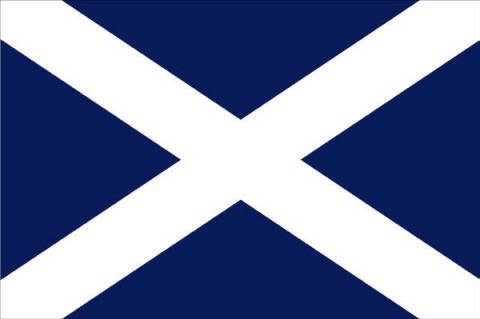
Written in 1793 by legendary Scottish poet Robert Burns, Scots Wha Hae is a fictional speech given by Robert the Bruce before the Battle of Bannockburn in 1314.  The Scots won their national independence at Bannockburn, and Scots Wha Hae has been one of Scotland’s national anthems and a rallying cry since its publishing.   The lyrics are very stirring and should resonate with all of us who look to our ancestors for inspiration in our fight to free our nations from our modern-day tyrants.

The poem in its original light Scots dialect:

Scots, wha hæ wi’ Wallace bled,
Scots, wham Bruce has aften led,
Welcome tæ yer gory bed,
Or tæ victorie.

Now’s the day, and now’s the hour:
See the front o’ battle lour,
See approach proud Edward’s power -
Chains and Slavery.

Wha will be a traitor knave?
Wha will fill a coward’s grave?
Wha sæ base as be a slave?
Let him turn and flee.

Wha, for Scotland’s king and law,
Freedom’s sword will strongly draw,
Freeman stand, or Freeman fa’,
Let him on wi me.

By Oppression’s woes and pains,
By your sons in servile chains!
We will drain our dearest veins,
But they shall be free.

Lay the proud usurpers low,
Tyrants fall in every foe,
Liberty’s in every blow! -
Let us do or dee.


The poem in English:

Scots, who have with Wallace bled,
Scots, whom Bruce has often led,
Welcome to your gory bed
Or to victory.

Now is the day, and now is the hour:
See the front of battle lower (threaten),
See approach proud Edward’s power -
Chains and slavery.

Who will be a traitor knave?
Who will fill a coward’s grave?
Who’s so base as be a slave? -
Let him turn, and flee.

Who for Scotland’s King and Law
Freedom’s sword will strongly draw,
Freeman stand or freeman fall,
Let him follow me.

By oppression’s woes and pains,
By your sons in servile chains,
We will drain our dearest veins
But they shall be free.

Lay the proud usurpers low,
Tyrants fall in every foe,
Liberty is in every blow,
Let us do or die!


The poem set to music and video from the movie Braveheart.


Print Page

About Nathanael Strickland

Nathanael Strickland is the owner and chief editor of FaithandHeritage.com. He was born in Dallas, TX, grew up in upstate SC, and now resides in SE TX. He received both his BS in Political Science with a minor in Economics and his MBA from Clemson University and now works in project management, SEO, and web design. He has ancestors who fought with the patriots in the American Revolution, with the Texans at the Alamo, and with the Confederacy in the War for Southern Independence. You can reach him by email at editor [at] faithandheritage.com.

  • James Steed

    Just two points, Nathanael, 1) First, Scots isn’t a dialect but a language; the difference being a historic effort to suppress the culture of the Celtic Peoples. The language is known as Lallans in Scotland and its similar cousin in Northern Ireland is Ullans. 2) Second, the true “Braveheart” is Robert the Bruce, who was not near the sissy portrayed in the movie. Wallace is/was a notable patriot and an inspiration to this day. Your point is especially well-taken since this was a period when Scotland went from a collection of Clans to its identity as a “Nation”. Previous to this, their consciousness was to themselves as a people, the Scots, and neither a governmental entity nor even a bounded piece of land. Thanks for posting this!

    • http://faithandheritage.com Nathanael Strickland

      Yes, there is the language of Scottish Gaelic, but there is also the Scots dialect of the English language which is what Burns wrote the poem in. You’re correct about Robert the Bruce. Historically, Bruce was as much of an outlaw as Wallace.

      • James Steed

        LOL! You’re-a-gettin’ me Scottish dander up, lad; Scots is nae a dialect of the English language. But for a Battle or two, we would be calling English, Southern Scots! Seriously, although there are certain similarities, so that one with a background in English can pick through much of Scots, it’s orthography, grammar and much of its vocabulary and terminology is unique to this Northern, elder step-cousin to English. In Scotland itself, Lallans is recognized as a unique historic language, and the BBC et al are backing a revival of this once persecuted and suppressed language. Children were smacked with rulers for speaking their native tongue and were discriminated against at every level. Similarly, the English Crown tried to stamp out Cymri (aka Welsh) and they were not permitted even a printing press until the 18th Century! Linguistic persecution has a long and infamous history! There was a splendid body of artistic works in the Scots language that went ignored for a long time and is only now -beginning- to come into its own in modern times! We are richer as “Kin” to recognize ALL the great achievements of our peoples. There are some great websites in/on Lallans & Ullans on the web, encouraging a revival of my Kin’s historic birthright! God bless the 5 Celtic Nations in diaspora!
        Regarding “Braveheart”, The Bruce was a noble patriot and leader of his people. He has been known as “The BraveHeart” due to this incident: It was Robert the Bruce’s dying wish to be buried in the Church of the Holy Sepulcher in Jerusalem (He was a Crusader, apparently) and his close friend James (?) Douglas and other companions were making the perilous journey when they were attacked by Muslim Saracens in Spain. The Saracens wished to desecrate his body, but James fought them with great valor and made a speech regarding ‘this Brave Heart’, referring to Bruce’s heart which he had cut from his corpse intending to take it on to Jerusalem. Douglas was unsuccessful in taking his friend and King to Jerusalem, but ‘The Bruce’s’ heart and body were buried separately in Scotland and enshrined befitting a National Hero & a great King. Many of ‘The Bruce’s’ escapades have made scholars wonder whether his legend was not mixed with that of Robin Hood, as Robin’s bears uncanny resemblance to historic battles carried on by Robert.

        btw- I descend from The Bruce & The Red Douglas :-)

        • http://faithandheritage.com Nathanael Strickland

          Again, I’m not talking about the original Scottish language of the Celtic language tree. I’m talking about the Scots dialect of the English language which the Scots starting speaking several centuries ago when they had English forced upon them and still speak today. If that poem had been written in actual Scottish Gaelic we won’t be able to understand it. It’s written in English, but the dialect of that language spoken by the Scots.

          • James Steed

            Before the Treaty of Union in 1707, Scots was the state language of Scotland used for all government business. Even after the Union, Scots continued in use by the Scottish courts for much of the 18th century. (Wikipedia-Lallans) Scots is the Germanic language variety spoken in Lowland Scotland and parts of Ulster (where the local dialect is known as Ulster-Scots). It is sometimes called Lowland Scots to distinguish it from Scottish Gaelic, the Celtic language variety spoken in most of the western Highlands and in the Hebrides. (Wikipedia-Scots Language) Scots is at the polar opposite end of Scottish Standard English. (ibed.) Prior to the 15th century English speech in Scotland was known as “English” (written Ynglis or Inglis at the time), whereas “Scottish” (Scottis) referred to Gaelic. From 1495 the term Scottis was increasingly used to refer to the Lowland vernacular and Erse, meaning Irish, as a name for Gaelic.
            The succeeding variety of Early northern Middle English spoken in southeastern Scotland, also known as Early Scots, began to diverge from that of Northumbria due to twelfth and thirteenth century immigration of Scandinavian-influenced Middle English-speakers from the North and Midlands of England. Later influences on the development of Scots were from Romance languages via ecclesiastical and legal Latin, Norman  and later Parisian French due to the Auld Alliance as well as Dutch and Middle Low German influences due to trade and immigration from the low countries. Scots also includes loan words resulting from contact with Gaelic. Early medieval legal documents include a body of Gaelic legal and administrative loans. Contemporary Gaelic loans are mainly for geographical and cultural features, such as ceilidh, loch and clan.
            From the thirteenth century Early Scots spread further into Scotland via the burghs, proto-urban institutions which were first established by King David I. The growth in prestige of Early Scots in the fourteenth century, and the complementary decline of French in Scotland, made Scots the prestige language of most of eastern Scotland. By the sixteenth century Middle Scots had established orthographic and literary norms largely independent of those developing in England. As early as 1603 
            a member of the Court of England wished to make a report to Mary of Guise, but when they began speaking in Scots, they had to agree to change to French as the language was unintelligible to him.
            As far as how many can speak this language in Scotland, an University of Aberdeen study in 2010, while a Census program entitled “Aye Can” will take greater pains to identify this aspect of language in their 2011 Census. In Ulster (Norther Ireland), the cognate language Ullans is estimated to be spoken by 2,000 persons (again, likely undercounted). My own Great-Grandfather, 5 generations in America, still spoke a great deal of Scots, which sayings are still a part of my family’s speech. Much of American English is strongly colored by Scots, which seperated from England under our Revolution, also called the Presbyterian War (Guess the nationality referred to?). I have the Scriptures in both Scottish Gaelic and Scots (Lallans); I have ancestors who lived in both Highlands and Lowlands, therefore the interest. Even within Scots there are multiple “dialects”, the most commanding likely being “Doric”. With Scotland making increasing moves toward independence, we are likely to hear more of this language and a revival of its use and literature.

          • James Steed

            Sorry, the number of speakers was omitted, somehow; it’s upwards of 2.5 Million speakers. -Jim

  • Betty the Beastlover

    Who am I supposed to believe now?