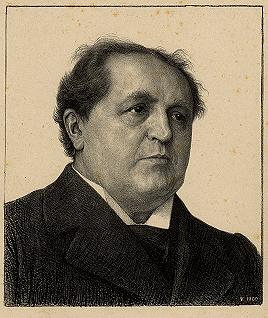
In his Lectures on Calvinism, held at Princeton University in 1898, the theologian Abraham Kuyper argued for the doctrine of common grace, in which he argued that believers and non-believers should work together for the common good and advancement of humanity and the kingdom of Christ. According to Kuyper, common grace binds Christians and non-Christians together in their mutual calling to build a better Christianized world.1
Kuyper is indeed orthodox in arguing that God both providentially sustains the created order and gives non-salvific good gifts to all humanity. This doctrine can certainly be referred to as “common grace.” Kuyper, however, errs in his practical application of this doctrine when he argues for a globalist-like cooperation of humanity for its own cultural advancement. He disregards culture as an expression of God’s providence and reasons as if it is solely a human accomplishment. From this distorted view of culture, he proceeds to a heretical view of the ordained social order, and especially of the biblical doctrine of race and nationhood. Furthermore, this reasoning clearly undermines the ideals of theonomy and the creation of a Christian culture by means of regeneration, rather than Occidentalization. It is clear that to me that Kuyper is in this aspect very much influenced by Jacobin thought and more specifically the idea of an indiscriminate brotherhood of all mankind. His argument in this case is based on the very philosophy he tried to free Calvinism from.
Before assessing Kuyper’s distorted view of race, however, we must first refute his unbiblical presupposition. Scripture plainly teaches: “Do not be unequally yoked together with unbelievers. For what fellowship has righteousness with lawlessness? And what communion has light with darkness?” (II Cor. 6:14). Furthermore, Scripture clearly teaches that believers, as God’s people, are to come out from among the godless nations and be separate (II Cor. 6:17; Ezek. 20:34). Theonomy as a civil principle is also founded in this principle of remaining separate from the world by advocating a mono-religious civil society, free from depraved and idolatrous influences. This does not necessarily mean complete withdrawal and isolation from the world, but should rather be seen a peaceful co-existence of a separated and distinguishable Christian nation with the surrounding world.
There are some Christian conservatives who advocate religious separation while also advocating for multiracial societies. this is inconsistent both with Scripture and with genuine Jacobin egalitarianism, and is in fact nothing other than an attempt to reconcile the two. Kuyper, unfortunately, applies his principle of religious co-mingling to races as well. Arguing that a “Christianized” society (a “Christian Democracy”) that is at the same time indiscriminate of religious differences greatly contributes to the progress of humanity, he continues to advocate racial intermingling as a means of advancing humanity. He states in his Lectures:
Thus on the one hand there are groups which have dominated exclusively their own inherent forces and on the other hand groups which by commingling have crossed their traits with those of other tribes, so having attained a higher perfection. It is noteworthy that the process of human development steadily proceeds with those groups whose historic characteristic is not isolation but the commingling of blood. On the whole the Mongolian race has held itself apart, and in its isolation has bestowed no benefits upon our race at large. Behind the Himalayas a similar life secluded itself, and hence failed to impart any permanent impulse to the outside world. Even in Europe we find that with the Scandinavians and Slavs there was hardly any intermingling of blood, and, consequently having failed to develop a richer type, they have taken little part in the general development of human life.2
There is, of course, very little truth in this statement. It is a very poor and grossly insufficient attempt to prove a distorted theory by practical examples. Reality actually proves the exact opposite. It is much more common to see cultures characterized by pride and a strong sense of identity making progress. This is fairly logical, since pride would naturally lead to more competitiveness and a motivation for progress. Think of the philosophical and literary advances made by the ancient Romans arising out of a desire to compete with the Greeks, or the scientific and military advances in Europe, America, and Japan during the years preceding World War II, or the technological boom caused by the Cold War between the US and Russia. Furthermore, the scientific and technological advances made by a developed and homogeneous nation like Sweden in the 20th century explicitly disproves Kuyper’s statement of Scandinavian inferiority.3 The intermingling of races often leads to a decline in the culture, as is evident, for instance, in the recent rise of Marxism in Latin America and the cultural crisis the Afrikaner youth are experiencing today.
The biblical principle of ethno-nationalism is not merely necessary for the survival of ethnicities, but also necessary for the respective ethnic groups’ continuing cultural development. In an imperial state like South Africa today, where forced integration of the different races and nations is commonplace, those opposed to this process often argue that some form of segregation or rather self-determination is necessary in order to preserve heritage, but the role self-determination ought to play in the future development of culture is too much neglected.
Cultural Marxists oftentimes argue that there is no practical reason why people from different races with the same language should not completely assimilate and intermingle. God, however, providentially establishes differences even despite these imperialist attempts at assimilation. A fine example of this would be the undeniable cultural differences between white Afrikaners and colored Afrikaans-speaking people in South Africa when it comes to their dialect, semantics, habits, and taste in music.4 Furthermore, there are a lot of problems in the colored society, e.g. high crime rates, gangster violence, homosexuality, alcoholism, and pedophilia, caused by this exact identity crisis–but liberals would only resolve it with further intermingling.5 One leader in the colored community actually made a statement a few years back, in which he admitted that the large variety of racial influences in the community directly contributes to its lack of unity.6 A very similar analysis can surely be made in the context of the United States, where English-speaking blacks and whites, each with a very different cultural heritage, are encouraged to assimilate.
Another aspect that desperately needs to be addressed is the popular liberal idea of selective assimilation. According to this principle, westernized Blacks, Asians, and especially mixed-race people can be assimilated into a broader white society and are then considered “cultural whites.” This civic-nationalist idea is founded on an individualistic view of humanity, rather than a biblical corporate view, and is workable only on a very short-term basis. Generally, it has very negative consequences for future generations, and it in practice also robs the other races of people of their own people. Such people could be instrumental in caring for their own communities in which God has providentially placed them, leading their own people to greater heights.
The practical facts of reality prove the biblical doctrine of race and nationhood, despite attempts by many post-Enlightenment Christian theologians, like Kuyper, to promote a disregard for it. God Himself ordained the natural social order, and it would be appropriate, both practically and ethically, for any follower of Christ to uphold and respect the divine decrees, rather than attempt to create an artificial and anthropocentric social order.
Footnotes
- Engelsma, D.J. 2003. Common Grace Revisited. p. 71, 93. Reformed Free Publishing Association, Grandville, MI. ↩
- http://www.kinism.net/index.php/marshall/more/a._kuyper_on_the_advance_of_humanity_through_the_races_of_europe/ ↩
- http://en.wikipedia.org/wiki/Sweden#Economy ↩
- http://www.mieliestronk.com/bruinmense.html ↩
- http://en.wikipedia.org/wiki/Cape_Flats#Modern_history.2C_politics_and_culture ↩
- http://152.111.1.88/argief/berigte/beeld/2005/09/22/B2/08/01.html ↩
| Tweet |
|
|
|